Showing posts with label CAD. Show all posts

Monday, July 11, 2016

Udemy Course - Autodesk Inventor

I have done a lot of online video tutorials over the last few years. I recently decided to try out Udemy. This is the first course that I have created. It is a fast-paced introduction to Autodesk Inventor. Let me know what you think.

I do like Udemy they do a very good job of lining out instructors so that we create structured content.

Autodesk Inventor: The Basics

Here is my introduction video to the course and why CAD is so awesome


Thursday, May 26, 2016

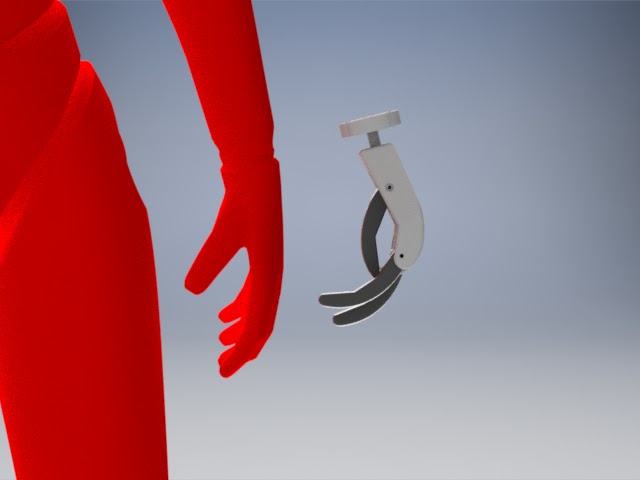
Raptor: 3-D printed prosthetic hand

I designed the Raptor to be a basic terminal prosthetic hand that could be 3-D printed. There are only 4 pieces that are printed and they can be made at a home printer.

I designed the Raptor hand for a design competition on GrabCAD. As of this post the competition is still up.

If you would like to print the Raptor yourself here are all the files that you need

If you would like me to design a custom application prosthetic for you feel free to contact me.

Here was a demo of the prototype. I used shockcord and paracord as the cables which is way to bulky. In future I will likely use small steel cable a maybe just rubber bands.


Portable Event Solar Phone Charger

This solar phone charger is designed to be deployed at outdoor events like weddings and concerts so that people can charge their phones. Normally extension cords or large cumbersome solar umbrellas have to be set up to fill this need.


The one issue is that people have to supervise their charging and the charger itself can be stolen. In a future iteration I will add essentially a port for a bike lock and locking compartments for phones to sit in while charging.

I would also like to spread the usb ports around the  edges more so that they are not so condensed. It will change the experience from waiting in line to just walking up and plugging into your own space.


Wednesday, March 9, 2016

Microservo 3-D printed gripper

I found that there are really very few 3-D printed grippers available. So I made on. This one uses a microservo and two rubber bands to create an semi-adaptive gripper. The overall mechanism is based off of the gripper developed at Slant Robotics. But at this moment the amount of material used is a bit large, so I may create a more minimal structure.

Download on GrabCad


Saturday, January 9, 2016

Jerry Project: Update

Here are some pictures of a couple final prototype designs for Jerry, a low cost, vision-based, personal robot. I also added the first official teaser video. The real prototype will be soon to follow.

The Jerry personal robot with all actuated components opened and extended

The Jerry personal robot with arm retracted and an added screen for improved telepresence functionality.


Thursday, December 10, 2015

Incurve Spherical Robot

For my senior design project I was the chief designer of the internal mechanisms of a spherical robot. Both actuated degrees of freedom have a full range of motion unlike any other spherical robot built. Additionally the team was able to design an original non-holonomic controller for the omni-directional system we were pursuing.

The photos below show the design progression that the system took. All the CAD seen is my own original work (Except for the shell in the final image). I apologize some concepts were abandoned before they could be completed.

Original Concept and Outline
Full Aluminum Truss-Like Structure
Hybrid Wood-Aluminum with Linear Actuator
Hybrid Material with Offset Planes of Rotation
Final Design Designed for Controller Simplification
Final Design of the Incurve Spherical Robot


Friday, March 20, 2015

SlantWatch

Another conceptual design. How I would make a smartwatch.

Smartwatches do not need to have large displays. In fact, the less obtrusive they are the better. So the SlantWatch has a thin profile.

Straps on smartwatches are also a waste of space. For something so dependent on battery more space needs to be made for the battery. So the Slant watch would house that battery in one half of the rigid cuff. The other half would hold excess electronics.

The entire piece is semi-solid. The flexible points would be near the top of the cuffs before the screen. This allows the watch to take some extra abuse while being put on.

The watch uses a flexible OLED display, with a solid glass capacitive touch screen. Though E-paper would also be an option.

The interface would be like a wheel on the wrist. As you scroll through apps you would eventually circle back around to the beginning. In order to change categories or menus one would side-swipe, basically "changing the wheel."

In a future version it would be great if the display could go all the way around the cuff, making it effectively seamless, no mater what angle your wrist is at.


Friday, February 20, 2015

SlantBook and Phone

What would a cellphone and a laptop made by Slant look like? I decided to design and phone and a laptop the way that I want those devices to be. The result are digital mock-ups of the SlantPhone and SlantBook.

The SlantPhone


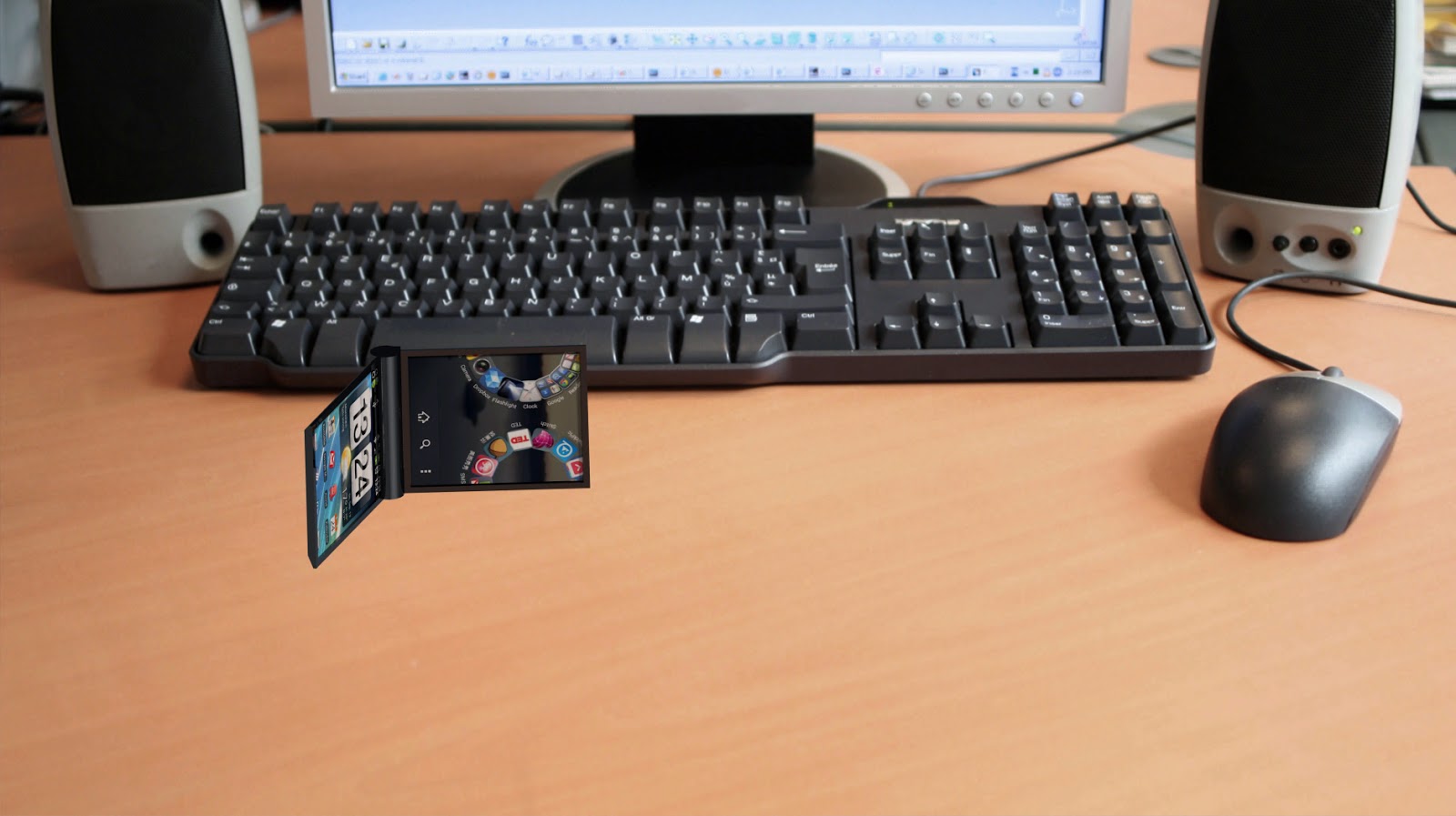
Who says the flip-phone is dead. Use it as a normal phone or watch videos without crouching over the display (and what video is rectangular anyway, a square display still give you all the size you need). Also scroll and control one display with the other.


Set the SlantPhone up sideways to show feeds while your at your desk


The cylinder hinge adds battery, cooling, and ergonomic capabilities to the SlantPhone that a typical smartphone doesn't.


You don't need a case anymore because the phone can take care of itself.


To really use it as a table piece let it support itself.


I will be 3-D printing this model of the SlantPhone just to see what it would be like in the real world.

The SlantPhone would also be separable. So that you could take a call with one half and browse with the other as if it were two devices. Each display is 3x2.5 inches.


The SlantBook

Basically, a larger version of the SlantPhone. The SlantBook would not have a keyboard. Just two touch displays which allows for a completely dynamic user interface. After all a laptop is limited by its keyboard and mouse, a tablet loses half of its display to a keyboard, and a tablet with a keyboard is just an under-powered laptop. The SlantBook has none of the problems of those devices.


Thursday, February 19, 2015

Rugged Prosthetic Arm Concept

I have wanted to build a heavy duty prosthetic for awhile. So I decided to get a basic concept design in CAD.

In the Slant Rugged Prosthetic 0.8, the elbow is supported by a bike spring. I downloaded the spring part, because of that the spring is a quite a bit larger than I would use in practice.

All the pieces of the arm are machined aluminum plates. This drastically reduces production costs of the prosthetic.

This arm is intended to be used by amputees with an active lifestyle. Its won't break and certainly won't short circuit. It could be used on snowmobiles, bikes, or water skis to give the amputee greater control and balance on the vehicle. It also allows for the user to perform heavier duty lifting, such as moving 2x4's, something no other prosthetic could withstand.

The passive design is a limitation since the arm is stuck in a particular static position, until the user basically leans into it. This is fine on an ATV, but not when moving boards around. (Check out my exoskeleton to see this problem in action)

Fortunately the design can easily be changed from using a spring to using a linear actuator. A slight adjustment in the fastening locations on the arm and a person would have a super strong arm, which would only require a very basic controller to operate.

But most of all this arm would be cheap. Maximum manufacturing cost would be around 200-400 dollars.

The next step will be to layout the manipulator and its attachment.

Sunday, February 15, 2015

Personal Submarine

This is a project that I found from a few years ago that I thought would be cool to share.

It is a design for a faceted personal submarine. It would have what are essentially trolling motors on the end of each fin. The two from fins can be angled by the pilot to turn and even submerge the sub because of the V-like design.

While not shown in this first Google Sketch-up Design the sides of the sub would have ballast tanks that would make it neutrally buoyant so the motors could take over.

The windows would be supported by steel bars so that the large panes don't have to support the water pressure entirely.


The faceted design was to make sure that the sub would be cheap to manufacture. You could just weld the panels over the internal frame. No molding.

This project could be changed to a pull behind sub, where it it is towed by a boat and the fins force it under the water. But then it would need to be a little sleeker. And the front fins need to be moved forward no matter what. So sue me I designed it in an hour.

Friday, March 21, 2014

BowlClaw

The BowlClaw was a quick idea for a way to pull hot bowls from a microwave and pack them around. It is just a solid piece of wood/plastic that you could keep in the with your potholders.


Saturday, March 1, 2014

MyGlass

I had some spare time so I decided to throw this up on Quirky. It is just so I don't keep losing my drinking glass midst my family's

Model R

This project is the development of the Model R modular hobby robotics platform. It was recently presented in an uncompleted form on Kickstarter.

This is the link to the Universal Mechanisms website                          er
Universal Mechanismsg                                 


Thursday, February 27, 2014

3D Printed MultiTools

These multitools, which I designed with Google Sketchup, are something that I wanted to have around.
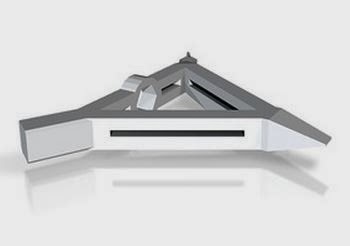
So I made them and had them printed. Since they were there, I decided to set-up a Shapeways store so anyone can get the designs printed.

The PentaTool at the right actually has, up to eight separate tools in it.


This bracelet multitool was meant to reduce
the clutter in my pockets if possible.


The TriTool at the right is actually my favorite. One because it is cheaper, two, it is just better. It has the same seven tools in it that are also part of the eight that the PentaTool has.